POLITICS
•
2402 views
The Invisible Giant: When India's most influential organisation raises a jurisprudential question
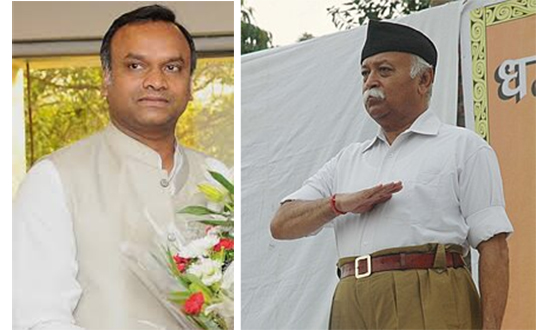
For decades, the Rashtriya Swayamsevak Sangh (RSS) has remained one of the most influential organisations in India without fitting neatly into conventional legal categories. It runs thousands of (branches) shakhas, influences public discourse, inspires a vast network of affiliated bodies, and has shaped the careers of some of the country's most powerful political leaders. Yet, a seemingly simple question posed by Karnataka Minister Priyank Kharge has exposed a far deeper legal puzzle: What exactly is the RSS in the eyes of law?
The political controversy began with Kharge's demand that the RSS disclose its legal status, registration details, financial structure and tax compliance. The response from RSS chief Mohan Bhagwat was equally striking. Registration, he argued, is not necessary merely because an organisation exists. The RSS, according to him, functions openly and does not depend on government funding.
The exchange immediately triggered the predictable political battle between the Congress and the BJP. Yet the real significance of the controversy lies elsewhere. It compels India to confront a fundamental legal question that has rarely entered mainstream political discussion: Can an organisation wield enormous social, political and economic influence without possessing a clearly identifiable legal personality?
Modern law is built around legal persons. Individuals are legal persons. Companies are legal persons. Societies, trusts, universities, corporations and even temples often enjoy recognised legal status. The concept enables the law to determine who owns property, who enters contracts, who receives funds, who pays taxes, and who can be sued or held accountable.
The RSS occupies an unusual position in this framework. It is neither a government body nor a statutory corporation. It is not commonly perceived as a company or a conventional association. Yet it operates through an extensive organisational network across the country. This creates a jurisprudential paradox. The larger and more influential an institution becomes, the stronger the public interest in understanding the legal architecture through which it functions.
The issue is not unique to the RSS. Across the world, influential movements, religious bodies, ideological organisations and advocacy networks often evolve through layered structures that blur the distinction between a social movement and a legal entity. Courts and regulators have repeatedly faced the challenge of determining where influence ends and accountability begins.
The question, therefore, is not whether the RSS should exist. Nor is it whether its ideology is acceptable or unacceptable. The more important question is whether Indian law possesses an adequate framework for dealing with organisations that exercise substantial societal influence while operating through dispersed and often informal structures.
The controversy also highlights a larger constitutional dilemma. Democracies thrive on freedom of association. Citizens are entitled to form organisations and pursue collective objectives. However, democratic legitimacy also demands transparency wherever organisational power intersects with public life. Balancing these two principles has always been one of the most difficult tasks of constitutional governance.
What began as a political confrontation has thus evolved into a jurisprudential inquiry. The debate is no longer merely about the RSS. It is about the relationship between power and accountability in a constitutional democracy. It is about whether influence alone should attract legal obligations. Above all, it is about the continuing relevance of one of law's oldest questions: when does a collective body become a legal person, and what responsibilities follow from that transformation?
In that sense, Priyank Kharge's remarks may be remembered not for the political controversy they generated, but for forcing India to revisit a foundational question of legal theory that lies at the intersection of constitutional law, organisational accountability and democratic governance.
The political controversy began with Kharge's demand that the RSS disclose its legal status, registration details, financial structure and tax compliance. The response from RSS chief Mohan Bhagwat was equally striking. Registration, he argued, is not necessary merely because an organisation exists. The RSS, according to him, functions openly and does not depend on government funding.
The exchange immediately triggered the predictable political battle between the Congress and the BJP. Yet the real significance of the controversy lies elsewhere. It compels India to confront a fundamental legal question that has rarely entered mainstream political discussion: Can an organisation wield enormous social, political and economic influence without possessing a clearly identifiable legal personality?
Modern law is built around legal persons. Individuals are legal persons. Companies are legal persons. Societies, trusts, universities, corporations and even temples often enjoy recognised legal status. The concept enables the law to determine who owns property, who enters contracts, who receives funds, who pays taxes, and who can be sued or held accountable.
The RSS occupies an unusual position in this framework. It is neither a government body nor a statutory corporation. It is not commonly perceived as a company or a conventional association. Yet it operates through an extensive organisational network across the country. This creates a jurisprudential paradox. The larger and more influential an institution becomes, the stronger the public interest in understanding the legal architecture through which it functions.
The issue is not unique to the RSS. Across the world, influential movements, religious bodies, ideological organisations and advocacy networks often evolve through layered structures that blur the distinction between a social movement and a legal entity. Courts and regulators have repeatedly faced the challenge of determining where influence ends and accountability begins.
The question, therefore, is not whether the RSS should exist. Nor is it whether its ideology is acceptable or unacceptable. The more important question is whether Indian law possesses an adequate framework for dealing with organisations that exercise substantial societal influence while operating through dispersed and often informal structures.
The controversy also highlights a larger constitutional dilemma. Democracies thrive on freedom of association. Citizens are entitled to form organisations and pursue collective objectives. However, democratic legitimacy also demands transparency wherever organisational power intersects with public life. Balancing these two principles has always been one of the most difficult tasks of constitutional governance.
What began as a political confrontation has thus evolved into a jurisprudential inquiry. The debate is no longer merely about the RSS. It is about the relationship between power and accountability in a constitutional democracy. It is about whether influence alone should attract legal obligations. Above all, it is about the continuing relevance of one of law's oldest questions: when does a collective body become a legal person, and what responsibilities follow from that transformation?
In that sense, Priyank Kharge's remarks may be remembered not for the political controversy they generated, but for forcing India to revisit a foundational question of legal theory that lies at the intersection of constitutional law, organisational accountability and democratic governance.


.jpeg)