PSU
•
6196 views
Untold saga of ONGC's declining state under this chairmanship
No one sets out to commit a blunder! Errors arise from imperfect decisions. The appointment and extension of the current Chairman, Oil and Natural Gas Corporation (ONGC) appears to be one such case.
ONGC’s core strength has always been Exploration & Production. Built from scratch in the late 1950s, it discovered sedimentary basins, brought fields onstream, and delivered the transformative Bombay High discovery in 1974. Production began in 1976 and continues.
Until the early 2000s, fields of significant size continued to be discovered on larger structures those were easier to identify. Thereafter, major exploratory success largely eluded the company for nearly two decades. In the interim, the government introduced the participation of multinational operators, assigning them certain fields originally discovered by ONGC for more efficient development. These operators confined their activities to the awarded production areas namely South Tapti, Mid Tapti, Panna, Mukta, Ratna and Ravva and undertook no additional exploration activities beyond their contractual mandate. A couple of domestic private operators contributed and discovered a few further fields, but nothing of much significance. Meanwhile, India’s energy demand continued to rise with economic growth, intensifying pressure on the import bill and generating understandable impatience at the policy level.
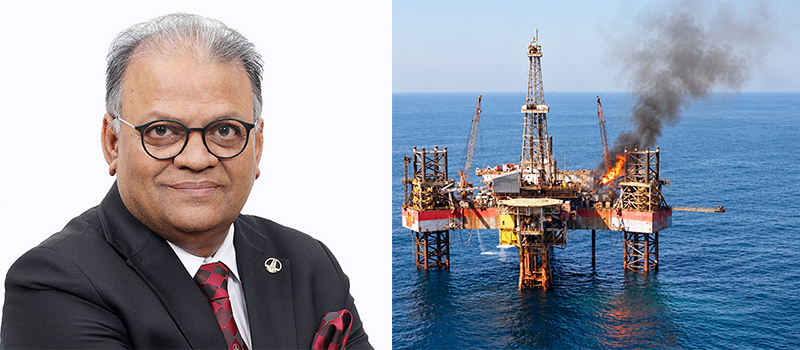
Post-COVID, a west-coast cyclone caused serious offshore accident with fatalities, highlighting safety and management issues of ONGC. The Chairman’s post had been held on an interim basis for quite a while. These circumstances led the government to seek an alternative capable of leading a complex enterprise such as ONGC. The government then appointed the retired BPCL Chairman, bypassing established norms of internal succession and domain expertise, for a three-year term. Term was extended by a year till December 6, 2026.
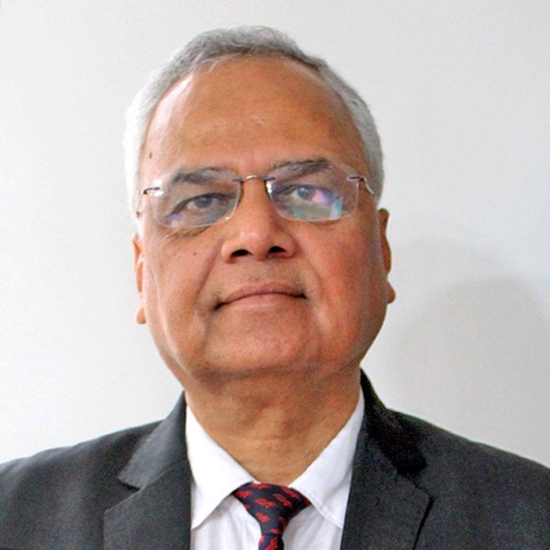
Chosen Chairman, an engineering graduate, unsuccessful in his numerous attempts to clear UPSC to become a civil servant, ultimately joined BPCL. Spent over four decades in downstream (retail, pipelines, marketing, supply chain & LPG). He rose at BPCL partly on account of lucky timing of widely publicized “Ujjwala” LPG scheme and primarily on political networking strength. Right after joining ONGC, he projected sustained low crude prices ($30–35), predicting continuous decline in global energy demand, slowing China, and a weakened OPEC—music to the ears of his political masters who largely focussed on reduced fuel import bill. This narrative helped sideline production concerns and also effectively stalled exploration by ONGC’s overseas arm. The unfortunate logic “Why explore overseas?” ignoring what other NOCs like Petronas, Petrobras, PTTEP, Sinopec and CNPC continue to do.
Production growth unfortunately has eluded ONGC. A few minor discoveries and some manipulated data have been used to claim an “arrest in decline,”. Which was primarily helped by start of production from KG-DWN-98/2 and same was wrongly attributed to a much hyped Mumbai High TSP. There are even greater risks attached while engaging Third Party Consultants in terms of demotivating ONGC’s work force and eroding seven decades of hard won competence.
Management style of this Chairman is widely seen as abrupt and intimidating. Women directors were on the Board of ONGC earlier, now no women executive have been elevated during his tenure so as they get a chance to join ONGC Board. Remarks questioning why women work at all, their place is at homes not offices, have been attributed to him in open forums. Which completely contradicts the government’s emphasis on women empowerment. However, backing of ONGC’s huge CSR funds has given this Chairman enough inroads in political/ bureaucratic corridors and liberty to act arbitrary.
Lacking sense of E&P business, the focus has been shifted toward Petrochemicals, Renewables, Trading, Marketing, Developing Convention Centres and Strategic Petroleum Reserves Storages, areas of greater personal comfort and optics, while core exploration and production matters are put at back burners. Prevalent procurement processes were dismantled; many tenders failed, delaying projects whose impact will be felt for decades. A company having business requiring domain expertise of different streams, where physical presence plays a crucial role has been forced to adopt concept like “Location Agnostic” , a catchy management jargon would be dangerous in long term.
The ultimate responsibility for the health of this national institution rests with those who appointed and extended the tenure of present leadership. Without doubt, the government had the right intent but erred in execution. One can only hope that the company emerges stronger from this devastating experience.
ONGC’s core strength has always been Exploration & Production. Built from scratch in the late 1950s, it discovered sedimentary basins, brought fields onstream, and delivered the transformative Bombay High discovery in 1974. Production began in 1976 and continues.
Until the early 2000s, fields of significant size continued to be discovered on larger structures those were easier to identify. Thereafter, major exploratory success largely eluded the company for nearly two decades. In the interim, the government introduced the participation of multinational operators, assigning them certain fields originally discovered by ONGC for more efficient development. These operators confined their activities to the awarded production areas namely South Tapti, Mid Tapti, Panna, Mukta, Ratna and Ravva and undertook no additional exploration activities beyond their contractual mandate. A couple of domestic private operators contributed and discovered a few further fields, but nothing of much significance. Meanwhile, India’s energy demand continued to rise with economic growth, intensifying pressure on the import bill and generating understandable impatience at the policy level.
Post-COVID, a west-coast cyclone caused serious offshore accident with fatalities, highlighting safety and management issues of ONGC. The Chairman’s post had been held on an interim basis for quite a while. These circumstances led the government to seek an alternative capable of leading a complex enterprise such as ONGC. The government then appointed the retired BPCL Chairman, bypassing established norms of internal succession and domain expertise, for a three-year term. Term was extended by a year till December 6, 2026.
Chosen Chairman, an engineering graduate, unsuccessful in his numerous attempts to clear UPSC to become a civil servant, ultimately joined BPCL. Spent over four decades in downstream (retail, pipelines, marketing, supply chain & LPG). He rose at BPCL partly on account of lucky timing of widely publicized “Ujjwala” LPG scheme and primarily on political networking strength. Right after joining ONGC, he projected sustained low crude prices ($30–35), predicting continuous decline in global energy demand, slowing China, and a weakened OPEC—music to the ears of his political masters who largely focussed on reduced fuel import bill. This narrative helped sideline production concerns and also effectively stalled exploration by ONGC’s overseas arm. The unfortunate logic “Why explore overseas?” ignoring what other NOCs like Petronas, Petrobras, PTTEP, Sinopec and CNPC continue to do.
Production growth unfortunately has eluded ONGC. A few minor discoveries and some manipulated data have been used to claim an “arrest in decline,”. Which was primarily helped by start of production from KG-DWN-98/2 and same was wrongly attributed to a much hyped Mumbai High TSP. There are even greater risks attached while engaging Third Party Consultants in terms of demotivating ONGC’s work force and eroding seven decades of hard won competence.
Management style of this Chairman is widely seen as abrupt and intimidating. Women directors were on the Board of ONGC earlier, now no women executive have been elevated during his tenure so as they get a chance to join ONGC Board. Remarks questioning why women work at all, their place is at homes not offices, have been attributed to him in open forums. Which completely contradicts the government’s emphasis on women empowerment. However, backing of ONGC’s huge CSR funds has given this Chairman enough inroads in political/ bureaucratic corridors and liberty to act arbitrary.
Lacking sense of E&P business, the focus has been shifted toward Petrochemicals, Renewables, Trading, Marketing, Developing Convention Centres and Strategic Petroleum Reserves Storages, areas of greater personal comfort and optics, while core exploration and production matters are put at back burners. Prevalent procurement processes were dismantled; many tenders failed, delaying projects whose impact will be felt for decades. A company having business requiring domain expertise of different streams, where physical presence plays a crucial role has been forced to adopt concept like “Location Agnostic” , a catchy management jargon would be dangerous in long term.
The ultimate responsibility for the health of this national institution rests with those who appointed and extended the tenure of present leadership. Without doubt, the government had the right intent but erred in execution. One can only hope that the company emerges stronger from this devastating experience.


.jpeg)

, WCL on Oct 27.png)