BUREAUCRACY
•
2505 views
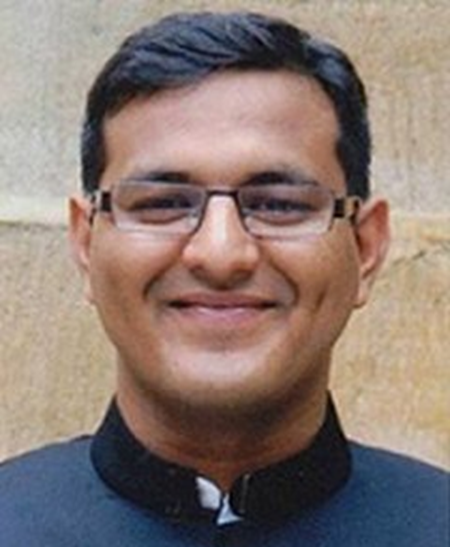
PGPPM offered by IIM Bangalore is a programme for leadership, career growth in public policy: Prof. Arnab Mukherji
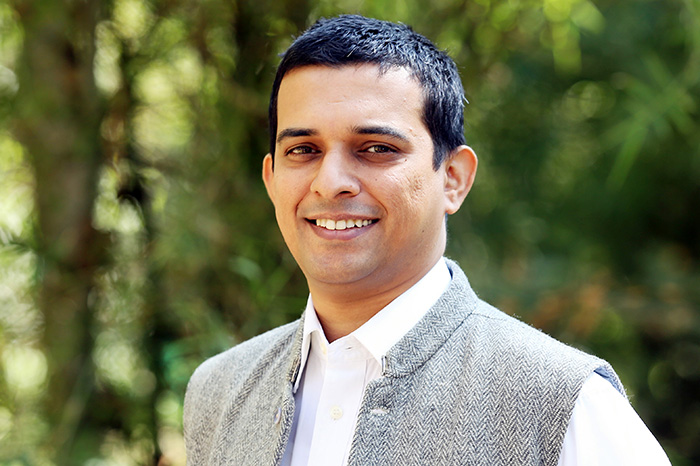
The Post Graduate Programme in Public Policy and Management (PGPPM), offered by the Indian Institute of Management Bangalore, is designed for mid-career public professionals seeking to strengthen their leadership, management, and policy capabilities. Established in 2002, the programme combines academic rigor with practical exposure to governance challenges and is delivered through a hybrid format that integrates online learning with immersive on-campus engagement.
In an interview with Bureaugram.com, Arnab Mukherji discusses the origins of the programme, its distinctive pedagogical approach, and the evolving demands of governance and public leadership in India.
What motivated IIM Bangalore to launch a programme like PGPPM?
IIM Bangalore’s engagement with public systems and governance goes back to the institution’s origins in the 1970s. Unlike many management schools that focused primarily on corporate leadership, IIMB also envisioned a role in strengthening administrative and developmental capacity in India. The institution saw management not only as a corporate function, but also as a framework for addressing complex public problems across sectors.
Following economic liberalization, however, the demands placed on the Indian state began to change significantly. Public institutions increasingly had to engage with private firms, civil society organizations, complex regulatory systems, and large-scale project implementation. Around this period, the Government of India, particularly the Department of Personnel and Training (DoPT), recognized the need for structured mid-career training for public officials operating in this changing environment.
The result was PGPPM — a programme designed to bring management thinking into public policy and governance while grounding learning in Indian realities. A key motivation was to move beyond imported case studies and build a programme that reflected the institutional complexity, diversity, and developmental challenges of India itself.
Over the past two decades, PGPPM has evolved into a mature platform for leadership development in governance and public systems.
What gap in public sector leadership does the programme address?
PGPPM is fundamentally a mid-career programme. Participants typically enter with substantial experience in administration, implementation, and field governance. The programme therefore focuses less on introductory training and more on helping officers rethink policy design, institutional coordination, and strategic execution.
One important gap the programme addresses is the distinction between implementation and design. Many officers spend years executing programmes, but relatively fewer opportunities exist to step back and critically evaluate how policies themselves are conceptualized and structured.
A second area concerns governance at the boundary between the public and private sectors. Today, many public functions are delivered through partnerships involving private firms, nonprofits, public sector units, and hybrid institutional arrangements. Managing such systems requires an understanding of incentives, accountability structures, organizational behavior, and stakeholder coordination across very different institutional cultures.
The programme also emphasizes management principles that improve execution — whether in public infrastructure, welfare delivery, urban governance, or regulatory systems. Questions of efficiency, project design, implementation strategy, and organizational coordination are increasingly central to governance outcomes.
At a broader level, the programme encourages participants to think beyond administrative silos. Public problems are rarely confined to a single department or sector. Effective governance requires integrated thinking across finance, technology, institutions, citizens, markets, and political constraints.
How does PGPPM differ from a conventional management programme?
PGPPM differs from conventional management programmes in both its audience and its orientation.
First, the programme is specifically designed around the realities of governance and public systems. Participants come from diverse services and institutional backgrounds, and the programme is structured to reflect the types of policy and implementation challenges they encounter in practice.
Second, the programme places significant emphasis on integrative learning. Participants are required to develop policy papers that connect conceptual learning with real-world governance problems. This process pushes students to move from theory to application — linking economics, strategy, organizational behavior, and management principles to actual policy settings.
A defining feature of the programme is the close engagement between faculty and participants. Since many participants bring rich administrative experience, the classroom becomes a space for exchange between academic frameworks and practical governance insights.
In an interview with Bureaugram.com, Arnab Mukherji discusses the origins of the programme, its distinctive pedagogical approach, and the evolving demands of governance and public leadership in India.
What motivated IIM Bangalore to launch a programme like PGPPM?
IIM Bangalore’s engagement with public systems and governance goes back to the institution’s origins in the 1970s. Unlike many management schools that focused primarily on corporate leadership, IIMB also envisioned a role in strengthening administrative and developmental capacity in India. The institution saw management not only as a corporate function, but also as a framework for addressing complex public problems across sectors.
Following economic liberalization, however, the demands placed on the Indian state began to change significantly. Public institutions increasingly had to engage with private firms, civil society organizations, complex regulatory systems, and large-scale project implementation. Around this period, the Government of India, particularly the Department of Personnel and Training (DoPT), recognized the need for structured mid-career training for public officials operating in this changing environment.
The result was PGPPM — a programme designed to bring management thinking into public policy and governance while grounding learning in Indian realities. A key motivation was to move beyond imported case studies and build a programme that reflected the institutional complexity, diversity, and developmental challenges of India itself.
Over the past two decades, PGPPM has evolved into a mature platform for leadership development in governance and public systems.
What gap in public sector leadership does the programme address?
PGPPM is fundamentally a mid-career programme. Participants typically enter with substantial experience in administration, implementation, and field governance. The programme therefore focuses less on introductory training and more on helping officers rethink policy design, institutional coordination, and strategic execution.
One important gap the programme addresses is the distinction between implementation and design. Many officers spend years executing programmes, but relatively fewer opportunities exist to step back and critically evaluate how policies themselves are conceptualized and structured.
A second area concerns governance at the boundary between the public and private sectors. Today, many public functions are delivered through partnerships involving private firms, nonprofits, public sector units, and hybrid institutional arrangements. Managing such systems requires an understanding of incentives, accountability structures, organizational behavior, and stakeholder coordination across very different institutional cultures.
The programme also emphasizes management principles that improve execution — whether in public infrastructure, welfare delivery, urban governance, or regulatory systems. Questions of efficiency, project design, implementation strategy, and organizational coordination are increasingly central to governance outcomes.
At a broader level, the programme encourages participants to think beyond administrative silos. Public problems are rarely confined to a single department or sector. Effective governance requires integrated thinking across finance, technology, institutions, citizens, markets, and political constraints.
How does PGPPM differ from a conventional management programme?
PGPPM differs from conventional management programmes in both its audience and its orientation.
First, the programme is specifically designed around the realities of governance and public systems. Participants come from diverse services and institutional backgrounds, and the programme is structured to reflect the types of policy and implementation challenges they encounter in practice.
Second, the programme places significant emphasis on integrative learning. Participants are required to develop policy papers that connect conceptual learning with real-world governance problems. This process pushes students to move from theory to application — linking economics, strategy, organizational behavior, and management principles to actual policy settings.
A defining feature of the programme is the close engagement between faculty and participants. Since many participants bring rich administrative experience, the classroom becomes a space for exchange between academic frameworks and practical governance insights.
The programme also incorporates extensive experiential learning. Participants engage with field settings, implementation environments, and stakeholder interactions to understand how policy outcomes often diverge from policy intent. These experiences expose participants to the realities of last-mile governance and institutional complexity.
The overall objective is not merely to teach management tools, but to cultivate reflective practitioners capable of navigating ambiguity, institutional constraints, and rapidly evolving governance environments.
Who should consider applying to PGPPM?
The programme is intended primarily for mid-career public professionals involved in policymaking, programme management, regulation, and governance.
Over the years, participants have included officers from the IAS, IPS, Revenue Services, Railways, Telecom Services, public sector institutions, and several other government cadres. Increasingly, the programme also attracts professionals working at the interface of government, development organizations, and public systems.
The programme is particularly valuable for individuals who see themselves moving into leadership and policymaking roles during the course of their careers.
PGPPM also offers access to a strong alumni network of public leaders, administrators, and policy professionals across sectors and geographies. Over time, this network has become an important source of mentorship, collaboration, and professional support.
In addition, the programme awards a recognized master’s degree in management studies, making it one of the few blended mid-career programmes in India that combines professional flexibility with a formal postgraduate qualification.
What leadership capabilities are most critical in today’s governance environment?
Contemporary governance increasingly requires the ability to work across competing perspectives, institutional constraints, and stakeholder interests.
Many public policy challenges do not have clear or purely technical solutions. Instead, they involve trade-offs, uncertainty, negotiation, and coordination among actors with differing priorities and incentives. As a result, leadership in governance is less about finding perfect solutions and more about developing credible, accountable, and adaptive approaches to difficult problems.
At PGPPM, participants are exposed to multi-stakeholder perspectives through discussions, case analyses, and engagements with practitioners. The programme encourages officers to think critically about institutional dynamics and to recognize that policymaking often involves balancing competing objectives rather than optimizing a single outcome.
This orientation becomes especially important in areas such as climate change, digital governance, urban systems, infrastructure, and social policy, where governance challenges are deeply interconnected.
How does the programme integrate academic learning with real-world policy challenges?
A key strength of the programme lies in its integration of conceptual learning with field realities.
The programme regularly hosts practitioners, policymakers, sector experts, and institutional leaders who discuss contemporary governance challenges ranging from climate policy and infrastructure to technology regulation and sustainability.
IIM Bangalore’s research centres also contribute significantly to the programme. Participants are exposed to applied tools, analytical frameworks, and interdisciplinary approaches developed across the institute.
Equally important, participants themselves bring deep domain expertise and administrative experience into the classroom. The role of the programme is therefore not only to teach concepts, but also to help participants situate their experiences within broader analytical and institutional frameworks.
This creates a highly interactive learning environment where theory and practice continuously inform one another.
How is the programme structured?
PGPPM is a 14-month blended programme combining online coursework with intensive on-campus learning.
The programme consists of six academic terms and requires the completion of 72 credits. The first, second, fourth, and fifth terms are conducted online, allowing participants to continue in their professional roles while pursuing the programme.
The third term is a fully residential on-campus module lasting approximately 12 weeks. This component is particularly important because it immerses participants in the intellectual and institutional environment of IIM Bangalore. The residential experience allows participants to engage deeply with faculty, peers, campus activities, and collaborative learning processes.
The curriculum includes courses in economics, strategy, organizational behavior, public systems, marketing, and management principles applied to governance contexts.
The final phase of the programme includes policy paper presentations and a global policy immersion component that brings in international perspectives on public policy and governance.
What kind of learning experience can participants expect?
Participants typically come from highly diverse professional and disciplinary backgrounds, including engineering, law, medicine, administration, and technical services.
The programme therefore aims to create a common analytical language for understanding and evaluating public policy problems. This involves rigorous coursework, assessments, collaborative learning, and sustained engagement across disciplines.
Beyond classroom instruction, the programme emphasizes experiential and reflective learning. Participants engage with field settings, beneficiaries, implementers, and institutional stakeholders to understand how governance actually functions on the ground.
The final integrative layer of learning comes through the policy paper, where participants synthesize conceptual frameworks, field insights, and institutional understanding into a coherent policy intervention or governance analysis.
Over time, many alumni have noted that the programme helped them think more strategically, communicate more effectively, and engage with public problems in a more holistic manner.
How have PGPPM alumni contributed to governance and public administration?
The impact of PGPPM alumni can be seen across multiple dimensions of governance and public leadership.
Many alumni have gone on to occupy senior leadership positions within government, public administration, international institutions, and consulting organizations. Others have contributed through research, publications, institutional reforms, and policy innovation.
Several policy ideas, administrative reforms, and programme innovations developed through the programme have influenced practice in areas ranging from policing and contract design to public communication and infrastructure management.
At the institutional level, the experience of running PGPPM also informed IIM Bangalore’s role in initiatives such as the Mahatma Gandhi National Fellowship programme under the Ministry of Skill Development, which placed fellows in district administrations across India.
The programme’s broader contribution lies in building a network of public professionals capable of approaching governance with greater analytical depth, managerial capability, and institutional sensitivity.
A key strength of the programme lies in its integration of conceptual learning with field realities.
The programme regularly hosts practitioners, policymakers, sector experts, and institutional leaders who discuss contemporary governance challenges ranging from climate policy and infrastructure to technology regulation and sustainability.
IIM Bangalore’s research centres also contribute significantly to the programme. Participants are exposed to applied tools, analytical frameworks, and interdisciplinary approaches developed across the institute.
Equally important, participants themselves bring deep domain expertise and administrative experience into the classroom. The role of the programme is therefore not only to teach concepts, but also to help participants situate their experiences within broader analytical and institutional frameworks.
This creates a highly interactive learning environment where theory and practice continuously inform one another.
How is the programme structured?
PGPPM is a 14-month blended programme combining online coursework with intensive on-campus learning.
The programme consists of six academic terms and requires the completion of 72 credits. The first, second, fourth, and fifth terms are conducted online, allowing participants to continue in their professional roles while pursuing the programme.
The third term is a fully residential on-campus module lasting approximately 12 weeks. This component is particularly important because it immerses participants in the intellectual and institutional environment of IIM Bangalore. The residential experience allows participants to engage deeply with faculty, peers, campus activities, and collaborative learning processes.
The curriculum includes courses in economics, strategy, organizational behavior, public systems, marketing, and management principles applied to governance contexts.
The final phase of the programme includes policy paper presentations and a global policy immersion component that brings in international perspectives on public policy and governance.
What kind of learning experience can participants expect?
Participants typically come from highly diverse professional and disciplinary backgrounds, including engineering, law, medicine, administration, and technical services.
The programme therefore aims to create a common analytical language for understanding and evaluating public policy problems. This involves rigorous coursework, assessments, collaborative learning, and sustained engagement across disciplines.
Beyond classroom instruction, the programme emphasizes experiential and reflective learning. Participants engage with field settings, beneficiaries, implementers, and institutional stakeholders to understand how governance actually functions on the ground.
The final integrative layer of learning comes through the policy paper, where participants synthesize conceptual frameworks, field insights, and institutional understanding into a coherent policy intervention or governance analysis.
Over time, many alumni have noted that the programme helped them think more strategically, communicate more effectively, and engage with public problems in a more holistic manner.
How have PGPPM alumni contributed to governance and public administration?
The impact of PGPPM alumni can be seen across multiple dimensions of governance and public leadership.
Many alumni have gone on to occupy senior leadership positions within government, public administration, international institutions, and consulting organizations. Others have contributed through research, publications, institutional reforms, and policy innovation.
Several policy ideas, administrative reforms, and programme innovations developed through the programme have influenced practice in areas ranging from policing and contract design to public communication and infrastructure management.
At the institutional level, the experience of running PGPPM also informed IIM Bangalore’s role in initiatives such as the Mahatma Gandhi National Fellowship programme under the Ministry of Skill Development, which placed fellows in district administrations across India.
The programme’s broader contribution lies in building a network of public professionals capable of approaching governance with greater analytical depth, managerial capability, and institutional sensitivity.


.jpeg)