JUDICIARY
•
2808 views
Judicial Reform: Who Will Read My Case?
Judicial Reform: Part I
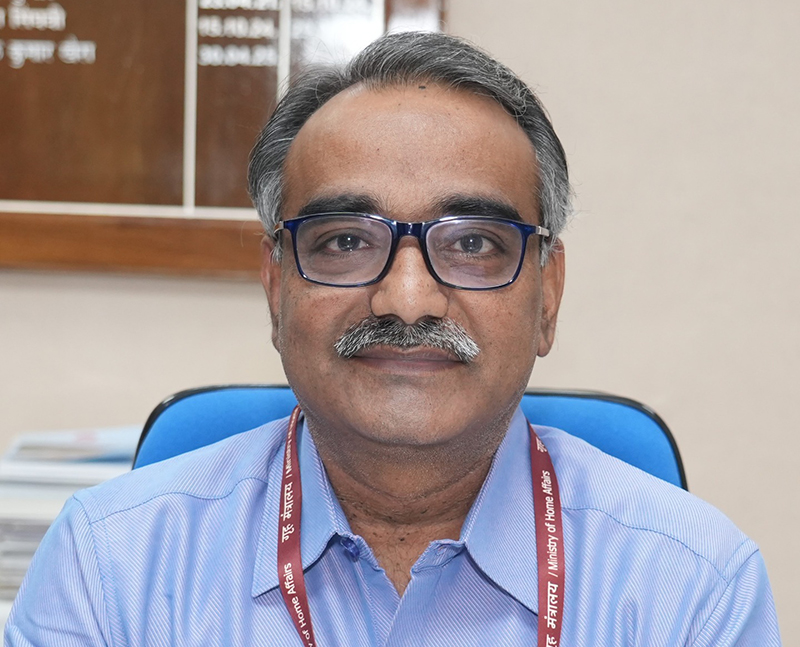
By Deepak Khairha (IRAS)
Mera Number Kab Aayega?
“Tareekh Par Tareekh…. Tareekh Par Tareekh... Tareekh Milati Hai Judge Sahab, Lekin Insaaf Nahin Milta.” It was a famous dialogue of movie Damini (1993) in which Sunny Deol was asking for justice to a lady. It is quite entertaining when you are not involved in the case and watching movie for entertainment and time pass. But when you are a petitioner in any case and a new date is given every time for hearing and nothing is concluded for years then it becomes very painful rather an entertainment as in many movies.
“Justice delayed is justice denied and justice hurried is justice buried”. But what about when the justice is excessively delayed and it is almost buried, if the final order is not passed in time bound manner then the justice delayed almost resembles to justice buried.
CAT Case number 3534, year 2025 Delhi Principal Bench
In this regard I want to quote my own case of CAT (Case number 3534, year 2025 of Delhi Principal Bench) in which till 10th July 2026 total more than 15 hearings have passed without any final order and even Railway is not implementing the interim order passed on 22nd January 2026 by the Honorable CAT. The case was filed in August 2025 and even after 15th hearing nothing concrete has been passed by the Tribunal. Railway keeps on issuing orders for DRM even after the interim order passed by CAT. Even the Contempt petition is filed by my advocate, that too is not properly disposed of.
The last hearing was very surprising. The court started nearly 10:45 a.m. and closed before 12:55 p.m. and even half of the cases were not heard by the honorable members (Court number: 3). There is no other urgent work than giving justice to aggrieved staff/officers of Government of India.
The more surprising thing was that even after 15th hearing my case was listed at serial number 46 just at the end of the listed cases for Court number 3.
Humble Request: Please Work a Little Longer
When there are 5.6 crores cases pending in Supreme Court, High Court, Tribunals and other courts then can't we keep open the courts a little longer. The total pending cases in Supreme Court of India are 94314, total cases pending in various High Courts are nearly 60 lakhs and in district and subordinate Court total 4.9 crore cases are pending and in various tribunals (state or central) 20 to 30 lakhs cases are pending.
If the Supreme Court can be opened for hearing a Mercy petition for a terrorist then why cannot it direct all subordinate courts, tribunals to work a little longer so that at least the pendency of cases will reduce to some extent.
Court direct executives and legislatures to implement their orders without any limitation then why not such rules shall equally be applied on the judicial system of India.
In CAT all the cases are filed by all educated staff and officers who are better off and can afford the fees of advocates. Even then the plight of the cases of such petitioners are really pathetic as these are taking years for final hearings and orders. Even in some cases which are crystal clear, in that too it takes years for final verdict.
I know after publishing of this article in media I may be suspended or removed or even imprisoned because of the contempt of Honorable courts. I am ready to face that if Honorable Supreme Court of India take some action for judicial reforms. The cost incurred on me would be insignificant compared to the immense benefits the nation would reap from the judicial reforms I propose.
Fair Listing of Cases
The case listing must be more fair on equitable basis so that the oldest case or the case which have heard in the maximum hearings must come first. It is seen in my own case in Court no. 3 that some cases after third or fourth hearing were listed at the top and few cases which appeared after 17th or 15th hearings were at the sequence number 46 or later in the order of listing on a particular day.
The sequence of listing shall be done by some algorithm of computer or AI driven tool and no manual interfacing or intervention must be allowed for sequencing of hearings in a particular Court. The oldest case or the case with highest hearings must be given overriding priority in the sequence of hearing and in case the next hearing is to be given for such long pending cases, the date must be given as soon as possible by the court with the mutual consent of both parties. Generally, administration wants delayed date but the petitioner prefers his or her case to be heard as soon as possible.
Judiciary: The Last Hope
Judiciary is the last hope for any person for any injustice done by the society, person or administration and if that too is not listening well in time then where that person should seek the justice.
In a very recent sad incidence in Supreme Court of India, one young lawyer cum practitioner, Prabal Pratap Singh has misbehaved with the judges and abused the Chief Justice of India. Although the judges have shown the magnanimity by not treating it as a case of Contempt of Court rather they treated it as a mental imbalance case. After this incidence do the Judiciary need an introspection? Such behaviour was exhibited by Mr. Singh after he became frustrated with the judiciary because he believed that he had not received justice. Are the people losing the faith in Judicial system of India? Or the system is corroded so much that the people have no hope even from Judiciary which was the ultimate resort for their voice.
The credibility of the Judiciary is at stake and such incidences of Supreme Court or any other court will continue to happen. The respect which was there in 40 years ago for judiciary in the eyes of public is no more of that level.
Some of the incidences /orders which spoil the image of judiciary are given below:
- · The first one was the bribery case of Member of Parliament and different punishment for voting after taking monetary benefit. It was the case of Jharkhand Mukti Morcha bribery case of 1993 in which the Congress was in minority and no confidence motion was to be passed against Congress but Congress bribed several MP. In this case MP who cast their votes in Parliament in favor of Congress after taking monetary benefits enjoy constitutional immunity from criminal prosecution under article 105(2) of Indian constitution which protects legislators from court proceeding regarding anything said or voted inside the house. But two years back in 2024, Supreme court of India overruled that in its verdict that bribery is not protected by parliamentary immunity and that legislature taking bribe can face prosecution under criminal law.
- · Second case was the opening of court midnight for the terrorist for his Mercy petition. This was the case of Yakub Menon in which the Supreme Court of India was opened midnight, the case in which the person was key plotter in 1993 Mumbai serial bomb blast which killed 257 people. In this case the President of India Shri Pranab Mukherjee rejected Memon's eleventh-hour Mercy petition late on the night of 29th July 2015. Then Menon's lawyer rushed to residence of Chief Justice of India and then supreme court's door were opened and a three judge bench held a historic hearing started at around 3:15 a.m. inside court room. Although following a 90 minutes hearing the bench rejected the stay of execution at around 5:00 a.m.
- · The derogatory comment by CJI for the Gen Z of India that resulted into the formation of the Cockroach Janta Party. Had the 'cockroach' remark been made by anyone other than the Chief Justice of India, the individual's career would likely have been ruined, and the same judiciary might well have prosecuted and imprisoned that person. These double standards have been responsible for the reducing faith in judiciary in the eyes of public.
- · Fire incidence at the residence of judge of Delhi High Court where the cash was found burning and the judge was not given any punishment except a simple transfer. In this fire case of Justice Yashwant Verma which occurred in March 2025 at his official Delhi Bungalow, leading to an investigation that ultimately resulted into his resignation in April 2026 and a high level enquiry committee was constituted and Mr. Verma was transferred back to his parent court Allahabad High Court. The three judge in house enquiry committee recommended his removal and in Parliament also the impeachment proceedings was proposed but which could not be initiated because he has already resigned. But in other similar case of any bureaucrats for such criminal activity, can he be allowed to go without any punishment? Only resignation is not a punishment, it is his choice and impeachment could have been started against justice Verma. Two stands can't be justified one for Judiciary and another for rest of government officers. Do we need to have two Constitutions one for all public servant and the other for judges?
- · Judges and Justices refused to give the IPR detail of their property in public domain. There were a lot of resistance by justices to give the IPR detail in public portal or their assets cannot be disclosed in case of RTI. Although such details were later given to the Chief Justice but not disclosed in public portal as in cases of other executives or bureaucrats. The Chief Justice of India (and the higher judiciary) is not required to submit immovable property returns to government servant portals. This distinction stems from the constitutional separation of powers and specific ethical frameworks
Judges of the Supreme Court and High Courts are constitutional authorities, not executive "government servants." Therefore, portals designed for executive civil servants (such as those managed by the Department of Personnel and Training) do not apply to them. Rather than filing returns on government administrative portals, asset disclosures for higher judiciary judges are governed internally
Although, under the 1997 'Restatement of Values of Judicial Life' resolution, Supreme Court judges voluntarily submit confidential declarations of their assets directly to the office of the Chief Justice of India rather than any executive agency or ministry.
Accretion Versus Clearance of Cases
In all departments we have a system to watch the clearance of all outstanding items. Here why not Judiciary shall have the same system of watching progress by higher courts for the cases pending in subordinate courts. For example, it must be court wise as well as judge wise data that must be open for public. It must have weekly updates of opening balance, accretion of cases, clearance of the cases and the closing balance of cases so that public can see the cases of various courts and judges. The most efficient court and judge shall be awarded with proper recognition by state and the most efficient High Court by the Supreme Court of India.
The closing balance must always be lower than the opening balance otherwise the pendency of cases will never be cleared. In Railway or other administrations, we stress over the clearance of oldest case. Similar approach shall be adopted by the Judiciary so that average time for disposal will automatically reduce and the cases will be cleared from the oldest date onwards.
The cases must be disposed of in time bound manner. If courts or judges are not able to dispose them then these cases must be flagged in red color and for such cases separate expert group can help to expedite the cases.
Similar to the practice adopted in the railway for tendering, the Judiciary can also divide the cases in various category like within 1 year, 2 to 5 years, 5 to 10 years, 10 to 20 years and above 20 years’ pendency cases. It will mount a pressure on court and the judge to dispose of oldest pending case earlier.
In my own CAT case (Delhi CAT Principal Bench) there are 5-6 benches or courts and there are more than 10 members. Every time my case goes to a new bench and they read the case afresh but nothing is moving ahead as every time a new date is given. Why not the case shall be assigned by the computer, based on some algorithm and the judge should handle the case till it is disposed of or the member retires or transfers to other place.
Promotion and postings are time bound issues, if these are not finalized within 6 months then there is no sense of their disposal after 2-3 years. The whole career of government servants may be spoiled by that delay. The administration wants to delay the disposal as the money is being used from the government exchequer while in case of petitioner the payment is made by him from his own pocket. A higher level of sensitivity is also expected from the judges for quick disposal of the pending cases.
FIFO Based Listing (First In First Out)
In computer system and algorithm there is a very common term FIFO (First In First Out), it means the oldest one must have overriding priority over the other new entrants. Although it is not fully possible for judicial cases but as far as possible we can adopt the principle of FIFO in case listing and disposal of the cases. It is quite possible if the cases are simpler and of similar nature barring few exceptional cases on which we cannot apply FIFO.
A Move Towards Digitisation
After Corona every system or department has moved towards digitization similarly many changes have made in Judiciary like hearing of petitioner and advocate on VC. Hence other things shall also move towards simplifications for example giving affidavit or vakalat mana type of documents to court by Digital Signature. We need to go to notary for notarizing our document of even one page. I was facing such problem at CLW, Chittaranjan, West Bengal because there is hardly one notary person and he is available for few hours only and he takes Rs. 300/- for each page. It is very costly if you have multiple pages. If that person is not available, then we have to go Asansol for getting it notarized.
Similarly, for filing this case I have to go to Delhi for first time and whenever I have to submit a new statement then I have to move Delhi 1300 km for submitting a document. The system should be streamlined while physical papers are to be submitted to the CAT or any other court. Why not the same affidavit or any new document can be submitted by advocate without notary. In reality what value addition is done by notary which cannot be declared by Digital Signature. It simply adds a new hurdle and expense which make the justice costlier.
Hence first time case filing can be easily done by petitioner directly or through the advocate without physically going into the court premises. By doing this change we can simplify the legal process and it will make justice easier, simpler, and more cost-effective for a poor common man. After the BJP government in 2014 the system of attestation by gazetted officer has been eliminated. Similarly, it can be done for any notarized document. We can transition to digital self-attestation in place of the current notarization process, simplifying procedures, reducing costs, and making access to justice more efficient.
No Decision As The Matter Is Sub judice
If a government servant files a case in court alleging that an officer has acted unjustly, the matter becomes sub judice. Once the issue is before the court, a successor or newly appointed officer may be reluctant or unable to review or modify the earlier decision, even if they recognize that an injustice has occurred. As a result, the affected person may have to wait for the court's final decision, even when administrative correction might otherwise have been possible.
In case of administration, the payment of the fees and other expenses are borne by the government but for petitioner every expense is borne by him. Hence after a certain limit of expenses, he got exhausted to fight the case and if the case lasts in courts for 2 to 3 years or by the time he retires then his purpose of fighting the case is completely defeated as many things are time bound.
In few cases It is seen that if the petitioner is of the choice of the government then the administration withdraws the case just after defeating in the CAT, even though there is a full merit to appeal in the High Court. But if the petitioner is not of the choice of the administration then they keep on appealing in the High Court, Supreme Court even though there is no merit of the case in favor of the administration.
One of the primary reasons for filing or not filing an appeal is that the litigation expenses are borne by the government exchequer rather than by the officers responsible for making the decision. As a result, appeals are often filed even in cases where there is little or no legal merit, without any personal accountability.
To discourage such frivolous or non-meritorious appeals, the Hon'ble Supreme Court should consider imposing substantial costs, penalties, or other appropriate consequences on the officers or officials responsible for authorizing such litigation, particularly where the administration ultimately loses the case. This would help prevent the unnecessary wastage of valuable judicial time and public funds spent on pursuing appeals that lack merit.
Introducing such accountability would encourage more careful decision-making before approaching higher judicial forums. It would also contribute to reducing the pendency of cases across courts by discouraging avoidable litigation and ensuring that only cases involving genuine and substantial questions of law are carried forward in appeal.
Hearing Dates and Sequencing/Order of Cases
There are many business tycoons who can spend crores of rupees for hiring the costliest advocate so that the early hearing can be ensured for them and bail if required, can be granted immediately because such renowned and costly advocates have a lot of clout in the judicial matters.
Instead, the listing of the case should not be based on the clout of the advocate but on the merit of the case so that a poor person with a young advocate can have a chance of fair and early hearing. Similarly, for the listing of the case on specific date so that the sequence or the order of the case is based upon the OLDEST CASE FIRST system and the case which has largest number of hearings earlier must be listed at the top for the due priority for such cases. All these must be done by computer system based on AI without manual interface or human intervention.
In my own case of CAT mentioned above there are five courts in Delhi principal bench and there are more than 10 judicial and administrative members in CAT. Every time the case goes to a new judge and total 15 hearings have already completed without any concluding final order. I am in a dilemma who will finally listen my case and more importantly when?
To ensure consistency, efficiency, and timely disposal of cases, the allocation of courtrooms and benches may be managed through a computerized case management system in a fair and transparent manner. As far as practicable, once a matter has been assigned to a particular Bench, the same Bench should continue to hear the case throughout its pendency, subject to administrative and judicial requirements. This would enable the Judges to remain familiar with the facts, issues, and procedural history of the matter, thereby avoiding repetitive hearings and unnecessary delays. Such continuity would also promote judicial efficiency, facilitate a better understanding of the petitioner's grievances, and contribute to the expeditious delivery of justice.
The court shall have live portals so that the oldest case must flash on the dashboard of that Bench and the Court. In case of oldest case earliest date of hearing must be given, if there is no other reason to give longer date and such cases must be listed on the top of all above cases on the date of hearing.
If the railway can run round the clock and other essential services can work whole day without interruption, the state government can work on Saturday too then why not courts can open on Saturday too and work a little longer.
Various vacations and holidays enjoyed by various courts are mentioned as summer vacation 6 to 7 weeks late May month to early July, winter break two weeks around Christmas and New Year, festival breaks week long brakes for Holi, Dussehra and Diwali.
The Judiciary have winter vacation during Christmas and long summer vacation, even though there are crores of cases pending in various courts and tribunals, then can't these vacations and holidays be compromised by the judges and justices for few years to clear the backlog so that people will have a strong faith on our Judiciary. These vacations were the Imperial culture of British Era which can be modified based on the pendency of the cases.
If the accretions of the cases are more than the clearance of the cases, then the cases will pile up in all courts and public will be craving for justice day and night. As far as the pendency of cases are concerned with Judiciary the main plea taken by the judicial system is the shortage of judges and vacancies in various courts and tribunals.
Creation Of Indian Judicial Services (IJS)
A long back pending decision is the creation of Indian Judicial Services (IJS) for which the selection could be conducted by UPSC like in Civil Service, IES, and ISS etc. Judiciary is the only pillar of democracy in which there are multiple entries like Civil Judge exam, Higher Judicial Services entry, High Courts and Supreme Court lateral entry to practicing advocates after practicing certain years in High Court and Supreme Court. Due to these multiple channels of entry, disputes regarding inter se seniority are a recurring issue and often give rise to resentment among candidates selected through competitive examinations.
The biggest challenge for implementing IJS through UPSC will be the resistance from practicing advocates of Supreme Court and High Courts and even by the serving judges of various High Court and Supreme Court. Hence a onetime tough decision is to be taken by the Parliament in consultation with Supreme Court, Bar Council of India and Bar Council of various states.
Presently the arbitration cases are dealt by the retired judges of High Courts or Supreme Court. The same can also be seen by the members of Tribunal of the concerned department like RCT, ITAT and NCLT etc. These members are already dealing with the disputed matters of that department and they have the knowledge of the concerned parties’ disputed matters.
In case of excessive load of the cases of arbitration, many more benches can be created in tribunals for dealing with the pending arbitration cases. The fee structure shall not be linked with the total value of the disputed amount rather it must be linked with “Per Case Basis and incentive shall be given to the arbitrators for speedy disposal. As these members are already getting the handsome pension plus the servicing salary from the Tribunal hence there is no need to link the fee with the disputed amount.
What should a person do if the Central Administrative Tribunal (CAT) keeps granting new dates without passing a final order or bringing the case to a conclusion? What remedy is available in such a situation?
(Note: The writer is an IRAS officer and ‘bureaugram.com’ does not buy his views)


.jpeg)