New Mode of Reservation: For a Better India
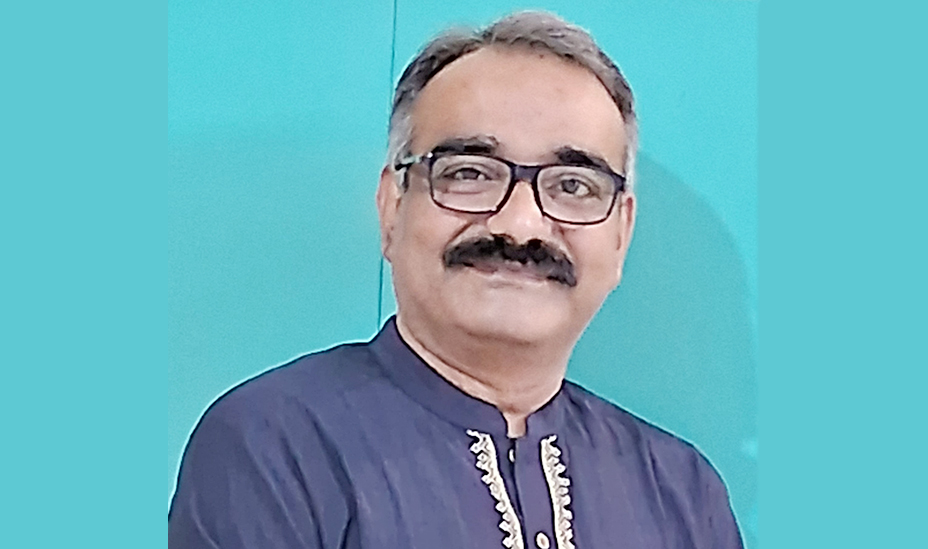
By Deepak Khairha
Ø Why Gaggu Saur, the tribal man, couldn’t become IAS?
Gaggu Saur aged 33, is a tribal person of Mahua Dhanda, Tahsil Amanganj, District Panna, Madhya Pradesh. He is among seven brothers and two sisters, and has been working as a labourer for 15 years under my friend Yogendra Bhadoriya, Panna. Gaggu is so poor that he could not even afford the expenses of the marriage of his sisters, hence all expenditures of marriage and Kanyadan of his elder sister were borne by Dr Shailendra Bhadoriya, younger brother of Yogendra Bhadoriya. This is the plight not only of Gaggu Saur but also of crores of tribal people, who are ignorant and uneducated, and those who are not aware of their rights and facilities given by the government and constitution.
Similar is the condition of the schedule caste fellows too. The reason is that the major benefit of the reservation is availed by the forward community of other states in UPSC exams. And within state also other advanced families are extracting the benefits of reservation, leaving the conditions of people like Gaggu, unchanged.
Now the disparity is not between Brahmins and people like Gaggu rather between Gaggu and forward strata of the reserved forward community.
Ø Britishers’ tool of divide and rule
Even after more than 75 years of Independence do we really need reservation, if yes, then what would be its mode so that society as a whole will progress? During the British Era before independence reservation was introduced just to divide the country based on communal line so that Indians as whole would not fight against the Britishers’ Supremacy as a united force. It was not a temporary measure by them rather a well plan permanent strategy to divide the society on religious and caste line.
The reservation was given to Muslims (Morley-Minto Reforms), Sikhs, Indian Christians, Anglo-Indians, Europeans (Montagu-Chelmsford Reforms), and Dalit (Poona Pact of 1932) mainly in the Central legislature and Municipal bodies but the dominance of the Britishers were not compromise in the Bureaucracy or Administration. After the independence in 1947 and formation of constitution in 1950 the reservation was introduced for Parliament, State Assembly and in government jobs at the behest of Shri Ambedkar ji, that too as a temporary measure for only 10 years. It was expected that by that time the disparity in society would patch up which was there between Dalit and upper castes.
Ø Multiple Generations taking major chunk
In the last 75 years we have moved from one extreme to another extreme in reservation distribution. It is a matter of serious concern that the gap which was there between the Dalit and upper caste has now come into within Dalit communities. The Dalits of my hometown, like Gaggu, are still poor and languishing under poverty and ignorance and ill-treated by upper caste and at the same time better off Dalits of other states have been in bureaucratic posts for nearly three generations. The persons of same communities of few particular states are taking benefit of reservation even though their father, grandfather and great grandfathers were Civil Servants.
The pathetic condition of Dalit cannot be improved till the better off Dalits give away the benefits of reservation to the more deserving poor Dalits. How can a poor Dalit compete in examinations with affluent Dalits from metropolitan cities when many of them benefit from better educational opportunities and stronger financial security because their parents are bureaucrats?
The poor Dalit will continue to be poor and weak till the major chunk of reservation is availed by the rich Dalits.
During my journey of Civil Services and then joining as an officer, I have seen many cases of officers those who were IES then they appeared in Civil Services and joined Railway then they became IRS, IPS then finally IAS. It means sometimes they might have taken the seats of poor Dalit. It is not the case of Dalit only but for OBC also it is equally applicable.
Once the benefit of reservation is availed by any person for getting a job in any group A, B C or D service then he must not be allowed to get the benefit of reservation for that group of service like someone gets the job in class l service, then they should not be allowed to appear in group A exam for the better service as a reserved candidate. Similarly, if someone gets selected in group D service then he can't appear in group D exams but he can appear for higher groups like A, B or C as a reserved candidate, then only the benefits of reservation will reach the most deserving candidate instead of elite reserved candidates.
Once the parents have availed the quota as reserve candidate then the immediate next generation shall not be given the benefit of reservation rather that seats shall go to the wards of more deserving parents of reserved category otherwise the benefit of reservation will continue to be availed by the small group of few lakhs of persons and tens of crores of weaker section of society will be deprived of this benefit.
Here no political party can force it rather the initiative shall come from the reserved categories' better off group, who can compromise their share for the benefits of the poorer and more deserving candidates of their community so that everyone gets the benefit of reservation rather only a specific group of elite community.
Ø Creamy Layer for OBC
There are many loopholes in the system and candidates can easily befool the administration and government agencies. It is pertinent to mention here few cases. In OBC quota there is a creamy layer as one criterion to get the benefit else you will be excluded, if your parents’ income is above a certain level. Almost all the Businessmen can easily hide their income and avoid paying taxes so that their wards can avail the benefits of reservation. Rather, it is their moral responsibility to pay due taxes and give away the share of reservation to the more deserving candidates. The criterion of creamy layer is linked with the annual income rather it must also be linked to the liquid and immovable assets under possession of the parents. With reference to businessmen, those who manipulate their financial details and bypass the creamy layer criterion, it is difficult to catch such fake entries into the OBC quota.
In case of service sector employees, the system is more fair because they are paid through cheques and every payment or salary is in records. but there are also multiple ways to cheat the system. In one case if the salary of both the parents are just above the cut off limit of creamy layer then these parents take divorce on paper and live together and their wards get the benefit of OBC quota.
In second case, if the one of the parents is above creamy layer then they show separation or divorce and the wards are dependent upon the maintenance given to other parent who is unemployed or poor.
In continuation of the second case, the third one is similar to the previous one that the employed parents take VRS or resign so that his wards will get the benefit and once he or she gets selected then the parents immediately join the service if the lien period is available or otherwise.
Ø Communities of Agrawal and Gupta
There is also a disparity with in one community for reservation given by one state but same community is not given the reserved status by the other state. For example, Agarwal and Gupta which are better off communities across the whole country but they are given the OBC status in Bihar and Jharkhand but they are in general category in Madhya Pradesh and Rajasthan. It is very surprising one joint family which partially migrated to Bihar or Jharkhand from MP or Rajasthan would be treated as the OBC in these states. It shall be reviewed by the central government and a common uniform list of OBC shall be declared by the centre so that the status of one caste would be same across all the states.
Ø Quota for Economically Weaker Section (EWS)
The latest entry into the reserved category is the EWS. The fake, forged or back door entry cannot be denied in this too. There is no perfect check in the system to detect the financial soundness of the parents of EWS candidates. In many cases It is seen that there are many businessmen having properties in crores of rupees but their children are availing the benefit of EWS quota. The reason, again, is the non-filing of income tax returns, the underreporting of gross annual income, or the declaration that their wards are dependent on a mother who lives on maintenance payments.
Such cases are only few for the salaried persons but for the business communities there may be many. In such cases the assets or properties of all general candidates coming under EWS and their parents' properties shall be scrutinised for the last 5 or 10 years. It is quite probable that such parents are transferring or selling their properties and remitting their money to some close relatives so as to show themselves financially poor. Even in big joint business families the assets are held in the name of Karta and others may show themselves as poor family members to avail the benefits of EWS quota for children, even though after having property worth in tens of crores of rupees.
All the political parties, with exception of none, are using reservation as a tool for increasing their vote Bank. No one could dare to eliminate the reservation from the country. Removing reservation could not be in their interest nor it would be in the interest of the country till there are disparities of rich and poor, upper caste and Dalit and forward and backward. Instead of removing it, a better option would be to modify it in such a way that the benefit will be availed of by the most deserving candidates.
Ø Expandable Quota for Non-General Categories
The most unfortunate thing for the general category is that the 40% quota of seats reserved for the unreserved category is subject to reduction. Just imagine a hypothetical case that in any year for any exam like Civil Services there are 50 seats for unreserved category for IAS and all the seats are captured by other reserve category like SC, ST, OBC, or EWS and all the candidates from these category are among 50 top rank then no general category candidate would become IAS for that year because once any candidate from SC, ST, OBC or EWS get the top rank then the seat of unreserved category will go to that reserved candidate treating him as an unreserved category candidate and the share of general category will reduce against the total seats earmarked for them. Hence the share of the SC, ST, OBC and EWS is expandable in reservation at the cost of general category.
When any reserved community candidates once become CM or Minister, are they really thinking for the upliftment of the reserve community, hardly any reserved category CM or Minister want the Chief Secretary or Advisor from their community, generally they keep such Advisors or top bureaucrats from the general category. If they really want the betterment of these communities, then they have to make Dalit as their Chief Secretary or Advisor.
Just quoting another similar case of disparity among the qualified profession in medical field. Just imagine any Minister is going for their bypass surgery, has he ever asked that he would be operated by the reserved category candidate? If they are really interested in the development of reserved category, then they could have said that they wanted to be operated by the reserved category doctors and specialists so that the reserved category candidates as doctor would get a chance of advancement and a recognition in medical field.
In both the above cases, if the survey is conducted then in 90% cases all these higher brass persons would prefer general category candidates as Chief Secretary, Advisor or medical surgeons. An even more surprising fact that may come to light is that even Chief Ministers or Ministers belonging to reserved categories may prefer general-category candidates as Chief Secretaries, advisors, or medical experts over persons from their own reserved communities.
Women’s Reservation: Why it always fails?
The most deserving form of reservation is the women's reservation. A recent effort by BJP led NDA is thwarted by other political parties. Even in the last 30 years one party or the other tried hard so that this Bill could not be passed. This reservation is more needed because it is not based on backwardness or economical angle so there is hardly any chance of fake entry and every household or family will get the benefit of it because women are inseparable part of the family. No family would be deprived of this benefit across the whole country.
Perhaps the main reason for the failure of this bill is that the major chunk i.e. 33% is going for women. Had the proposed percentage be 15 to 20% then the bill would have been passed easily. In the male dominated society, it is difficult for men to accept the women are competing with them or even going ahead of them but gradually man can accept it, if women reservation starts with 15% or 20% quota instead of directly 33%.
The reservation of women in Panchayati Raj, state Civil Services are implemented but Parliament, State Assembly and UPSC (Civil Services and other exams) are still starving for it. Even if it is implemented then also it must be a temporary measure for a limited period like 15 to 20 years, not a permanent solution for upliftment of women.
Ø Fake Entry in UPSC Exams
Even the UPSC does not have a fool proof system to detect the fake entry into Civil Services. Earlier the only key factor of detecting the case was date of birth to check the number of attempts. Now it is Aadhar Card, even the multiple Aadhar cards can be obtained by candidates. Even many Bangladeshi immigrants obtained the Aadhar Cards. Recently many private agencies were caught distributing fake Aadhar cards.
Even today in EWS cases no agency or government organisation is checking the complete financial status of parents for the last 5 years. The case of IAS lady officer of Pune is the proof of such loopholes in the selection of Civil Services.
The surprising thing is that such cases often go undetected until a complaint is made by relatives or neighbours and an inquiry is conducted by the government. Only then do these cases come to the attention of the media and the public. Such complaints are often lodged by relatives or neighbours out of jealousy or in response to the ostentatious display of wealth and status by the selected officers.
Ø Pune IAS case: An eye opener
Apart from the bureaucratic setup similar benefit is also availed in the legislature too. The legislature is having the reservation only for SC/ST. In some of the cases, it is seen that some members of SC/ST have become the Member of Parliament or Member of Legislative Assembly 6 to 7 times. It means that only one family remains uplifted for years or decades. It is the moral responsibility of that member to give the chance to other well deserving poor person of that community. One tenure of MP or MLA is sufficient to uplift a family from the downtrodden to upper section of society and chance shall be given to other members of that community, instead of keep giving to same member. If this system continues in the future, the benefits of political reservation will continue to be enjoyed by a handful of people and others will remain weaker because the elite group of that community will not allow the weaker and more deserving candidate to come forward.
Ø SC/ST Protection Act: Truly poor and supressed are unaware
Many cases of misuse of the Act of Prevention of Atrocities on SC/ST have come into picture. The surprising thing is that such cases are filed by the better off candidates of SC/ST community but the real suppressed person of the village are still ill-treated in the society. Actually this act should not be invoked for those who are already rich, better off and already super class I officers or politically active persons because they are neither weak nor downtrodden. Just because they belong to SC/ST category they are covered under this act.
A new criterion shall be framed that who can take benefit of this act by excluding the persons who are already rich, forward and stronger ones in the society. Just imagine an IAS officer of reserve community who is collector and whose peon is from the upper caste. Now think who is weaker here in this fiduciary relationship. But the power of the act is with the reserved candidate who is at a very higher post as a collector.
This act shall be invoked only if the SC/ST person is working under a senior officer who belongs to the unreserved or non-Dalit category.
Because of this fear of the Act generally non Dalit candidates are always scared of the SC/ST persons in any official setup because this Act can anytime may be misused by SC/ST candidates. The Act was made in 1989 just to give power to the weaker section of the society but the truly deserving candidates from villages are still struggling under the burden of untouchability and social discrimination, while the benefits are often availed by the already affluent and advanced sections of the SC/ST communities. In some cases, it may even be argued that these benefits are misused by them.
Suggestions
Hence it is required to start pan India debates across all cities, schools, colleges universities and educate the persons of all reserved community about the modified reservation system and its benefit in long term then only a common solution will come out to implement the modified form of reservation. Here the initiative shall come from the better off members of the reserved community or the leaders of political parties, who are already in upper strata in the reserved community, they can encourage their brethren of the community to sacrifice the share of reservation in favour of more deserving reserved candidates, who are poor, backwards and downtrodden.
3. The OBC status should be universal and same across pan India. If Agrawal and Gupta are general category candidates, then they must be general candidates in all the states. No OBC status shall be given to them in few selected states, although they can come under EWS category based on their financial status. Similarly, for the other castes also. And OBC status must be granted by the Centre rather than by individual states.
4. The benefit of the reservations shall not be given to multiple generations of any community, whether in government job or in legislature or municipal bodies. Only one generation is sufficient to uplift the family after getting the benefit of reservation.
5. The creamy layer cut off criteria for OBC and financial criteria for the EWS should be more or less similar, instead of wide gap between these two on financial matters, and both shall change after a certain period of time in the same proportion.
6. The seats once reserved for general category should be sacrosanct. These should not reduce if any reserved community candidate gets the rank among the toppers in merit. Once the application is made against any category then the seat shall go against that category only, whatever may be the rank of candidate. No expandable quota should be permitted to any reserved community.
7. The ticket by any political party for ex MP/MLA shall not be given once the benefit is availed by any person to become MP/MLA in the past, as they are already uplifted in society financially as well as socially. Hence they should not contest election from the reserved seat. Even the benefits shall not to be given to other family members of MP/MLA.
8. All the loopholes in OBC for back door entry, by bypassing the criteria of creamy layers shall be plugged. For example, showing divorce on paper, separation and living on maintenance money given to the poor spouse or taking VRS or resign from the service to come below creamy layer. Instead of salary only, the overall assets shall also be checked for creamy layer. Creamy layer should be modified to cover overall assets along with the monthly salary of the parents.
9. Proper scrutiny of the assets of the EWS candidates’ parents shall be done after the selection of these candidates. The assets shall be linked to Aadhar number and PAN numbers. The duration of checking should be minimum 5 years, preceding the year of selection. Special checks shall be made for the businessmen parents because such persons have full scope to hide their income or to divert their asset into others’ names so as to avail the benefit of EWS, as many are not filing actual income returns to income tax department.
10. Once any candidate gets selected in any class of service like group A, B, C or D then they should not be allowed to appear in the exam of that group of service on the reserved seat rather they should apply from the general seat. But they can avail the quota for higher grade of services. For example, if someone has secured a job in Group C service, they should be allowed to avail the benefit of reservation only for Group A or Group B services. If someone gets group A service, then they should not be given the benefit of reservation for any group A service for further upgradation.
Baba Sahab has dreamed of an India where there would not be any gap between upper castes and Dalits but this gap has shifted to within Dalits in the form of very poor Dalit and rich forward Dalit. the dream of egalitarian society by Baba Sahab and Gandhi ji could not be realised even in 75 years.
The gap was there, the gap is there and the gap will be there in future too, till the rich reserved category surrender the share of their pie in favour of more deserving poor reserve candidates. Earlier the gap was between the upper caste and Dalit which has come now with in the reserved community itself which is even more wider than the earlier gap. The poor guy of my district is still poor. Even after 75 years of the so called reservation benefit, which is being availed by generations of rich ones rather by this poor reserve category guy. Even he was not supported or guided by his own brethren.
The differences between upper caste and Dalit were eliminated by reservation in services and legislatures to some extend but how the constitution will remove the gap between very poor Dalit and forward rich Dalit. There is no other way than by sacrifice of reservation benefit by the upper rich community in favour of more deserving community of Dalit class. The bigger challenge is that no political party can do that it can happen only at the initiatives of rich forward schedule castes’ and schedule tribes’ candidates those who are better off.
These views expressed by an IRAS officer in the Railways. The Bureaugram.com does not buy his views. The author can be contacted through his email Id: deepak_khairha@yahoo.com


.jpeg)